Internal Bra Mastopexy in Los Angeles
Candidates
Women seeking the internal bra mastopexy should be in good health and have realistic expectations about their results. Women who choose the internal bra mastopexy over a traditional technique may have one or more of the following:
- Mild to moderate ptosis
- Good skin quality (thick skin)
- Breast tissue that is too heavy or too saggy for a circumareolar lift
- Need for an inverted-T mastopexy but do not want the inverted-T scar
Internal Bra Mastopexy Procedure
Dr. Kao performs the internal bra mastopexy as an outpatient procedure with the patient under propofol sedation or general anesthesia. To minimize visible scarring, Dr. Kao combines an exterior circumareolar incision on the skin with an internal inverted-T molding of the breast tissue on the inside. Through the exterior incision, he separates the skin from the breast tissue. The outer skin is lifted and reduced in a circular pattern. Through the internal inverted-T incision, the breast tissue is lifted and molded into a more youthful shape. Dr. Kao places an acellular dermal (ACD) matrix to create an internal bra that attaches to the chest wall, which eventually becomes incorporated into the breast tissue. The ACD matrix provides extra structural support to the lower breast to prevent future sagging from occurring. It’s like wearing an invisible bra under the skin all the time.
Benefits of Internal Bra Mastopexy
- Achieve a true lift without an inverted-T scar
- ACD matrix offers additional internal support
- Very low risk of rejection of the ACD matrix
- Able to reposition the nipple/areolar complex up to eight centimeters
- Control of the shape of the breast mound
- Control of the roundness of the areola
- Control of the scar around the areola
Recovery
You will experience some bruising, swelling, and redness following your procedure. Drains are placed for five to seven days to minimize swelling. You may experience some mild discomfort, but oral medication will be prescribed to control any associated pain. You should avoid strenuous physical activities for three to four weeks following your procedure.
All of Dr. Kao’s patients have the option to stay at an aftercare facility following their procedure. KO’AN Recovery Center is a post-surgical care facility situated just across the street from Dr. Kao’s surgical facility, and is located in a federally and state-licensed healthcare center.
Breast numbness and loss of nipple sensitivity are usually only temporary. You can return to work after one week and resume your normal exercise routine after four weeks. Most major swelling should begin to subside after six weeks, at which time your final results should become apparent.
Results
Internal bra mastopexy provides the durable lift results. The ACD matrix adds structural support for a permanent correction to the breasts. Dr. Kao’s incision technique offers virtually no visible scarring.
If you wish to restore a youthful appearance to your sagging breasts, schedule your consultation today. Dr. Kao is a board-certified plastic surgeon who specializes in cosmetic and reconstructive surgery. He and his helpful, friendly staff are available to answer any questions or concerns you may have. Contact our office at 310-315-9211 or fill out our online contact form for additional information.

Internal Bra Mastopexy in Los Angeles
Breast shape can change significantly over time. Pregnancy, breastfeeding, weight fluctuation, genetics, gravity, and the natural aging process can all contribute to breast ptosis, or sagging. For many women, the concern is not simply breast size. It is the way the breast sits on the chest, the position of the nipple, the fullness of the upper breast, and the degree of support in the lower breast.
At Kao Plastic Surgery in Santa Monica, Dr. Chia Chi Kao offers internal bra mastopexy for select Los Angeles breast lift patients who want a more lifted, youthful breast contour with long-lasting internal support and a scar-conscious approach. This advanced breast lift technique is designed to reshape the breast from within while minimizing visible external scarring when a patient’s anatomy allows.
For women in Los Angeles, Santa Monica, Beverly Hills, Brentwood, Pacific Palisades, Malibu, and surrounding Southern California communities, internal bra mastopexy may be an appealing alternative to a traditional breast lift when breast tissue, skin quality, degree of sagging, and aesthetic goals make the procedure appropriate.
What Is Internal Bra Mastopexy?
Internal bra mastopexy is an advanced breast lift procedure that supports and reshapes the breast tissue internally. A traditional mastopexy, or breast lift, usually removes excess skin, repositions the nipple-areolar complex, and reshapes the breast mound through an incision pattern that may include an inverted-T or anchor-shaped scar. Internal bra mastopexy is different because it focuses on creating stronger internal breast support rather than relying only on tightened skin.
The “internal bra” concept refers to a supportive structure placed beneath the skin and breast tissue. This structure helps reinforce the lower breast, improve shape, and reduce the tendency of the breast to settle downward again over time. In properly selected patients, Dr. Kao may combine an exterior incision around the areola with internal breast tissue shaping and support, helping avoid the external inverted-T scar pattern often associated with traditional breast lift surgery.
Patients researching breast lift options can also review general educational information from the American Society of Plastic Surgeons breast lift overview. However, every surgical plan is highly individualized, and the best approach depends on each patient’s anatomy, tissue quality, and desired result.
Why Women Choose Internal Bra Mastopexy
Many women want a breast lift but hesitate because they are concerned about visible scars. A conventional breast lift may require an incision around the areola, a vertical incision down the lower breast, and a horizontal incision in the breast crease. This traditional anchor or inverted-T pattern can be very effective, especially for more advanced sagging, but some patients want a more discreet option when possible.
Internal bra mastopexy is designed for women who need more support than a simple circumareolar lift can provide but who may not want the full external scar pattern of a traditional lift. The technique can help elevate the breast, reshape the breast mound, improve lower-pole support, reposition the nipple and areola, and create a more youthful breast profile.
For many patients, the appeal is not only the lift itself. It is the added control over breast shape. Dr. Kao’s approach considers the position of the nipple, the roundness of the areola, the projection of the breast mound, the quality of the skin envelope, and the way the breast will age after surgery.
Who Is a Candidate for Internal Bra Mastopexy?
The best candidates for internal bra mastopexy are women in good overall health who have realistic expectations and want to improve breast sagging with a scar-conscious surgical plan. Candidates may have mild to moderate ptosis, good skin quality, thick or resilient skin, breast tissue that is too heavy or saggy for a simple circumareolar lift, or a need for more significant reshaping without wanting an external inverted-T scar.
Internal bra mastopexy may be especially appropriate for women who have experienced breast changes after pregnancy, breastfeeding, weight loss, aging, or previous breast surgery. Some patients may also consider this technique after implants, implant removal, or changes in breast shape over time. Patients interested in related breast procedures may also want to review breast lift surgery, breast implant revision, implant removal with breast lift, and breast enhancement with fat transfer.
Not every patient is a candidate for internal bra mastopexy. Women with severe ptosis, significant skin excess, very thin skin, poor skin elasticity, or anatomy that requires more extensive correction may achieve a better result with another type of breast lift. During a consultation, Dr. Kao evaluates the breast tissue, nipple position, skin quality, degree of sagging, breast volume, and long-term goals before recommending the most appropriate surgical plan.
How Internal Bra Mastopexy Differs From a Traditional Breast Lift
A traditional breast lift improves breast position by removing excess skin and reshaping the breast through external incisions. The incision pattern depends on the degree of sagging and may include a periareolar incision, a vertical lift, or an anchor-shaped incision. These techniques remain important options and can produce beautiful results for the right patient.
Internal bra mastopexy differs because it places special emphasis on internal structure. Rather than depending only on skin tightening, Dr. Kao reshapes and supports the breast tissue from within. This can help create a lifted breast mound with added support in the lower breast, where sagging commonly recurs.
In selected patients, the external incision can be limited to the areola while the internal reshaping provides the structural correction needed for a more durable lift. This is one of the reasons internal bra mastopexy may be appealing to women who need more than a minor lift but want to avoid the visible external anchor scar when safely possible.
The Internal Bra Mastopexy Procedure
Dr. Kao performs internal bra mastopexy as an outpatient procedure. Depending on the surgical plan and patient needs, anesthesia may involve propofol sedation or general anesthesia. The procedure is customized based on the amount of breast sagging, the thickness and elasticity of the skin, the weight of the breast tissue, the position of the nipple-areolar complex, and whether additional procedures are being performed.
To minimize visible scarring, Dr. Kao may use an exterior circumareolar incision around the areola. Through this incision, he separates the skin from the underlying breast tissue so the breast mound can be reshaped internally. The outer skin is lifted and reduced in a circular pattern, while the deeper breast tissue is molded into a more youthful shape.
Internally, Dr. Kao may use an inverted-T shaping pattern beneath the skin without placing the traditional external inverted-T scar on the breast surface. This allows the breast tissue to be lifted, shaped, and supported from the inside. When appropriate, an acellular dermal matrix may be placed to create the internal bra structure. This supportive material attaches to the chest wall and is gradually incorporated into the patient’s tissue.
The goal is to provide additional lower-breast support, much like an invisible bra beneath the skin. This internal reinforcement can help maintain breast position, support the breast mound, and reduce the risk of future sagging.
Benefits of Internal Bra Mastopexy
Internal bra mastopexy offers several potential benefits for the right patient. One of the most important is the ability to achieve a meaningful lift without a traditional external inverted-T scar when anatomy allows. This can make the procedure attractive to women who want breast rejuvenation but are concerned about visible scarring on the lower breast.
The technique may also provide additional internal support through the acellular dermal matrix. This support helps reinforce the lower pole of the breast, which is often where tissue stretches and descends over time. By supporting the breast from within, internal bra mastopexy may provide a more durable improvement than a skin-only lift in select patients.
Additional benefits may include improved breast mound shape, better control of areola size and roundness, improved nipple position, enhanced breast projection, and a more youthful breast contour. In some patients, the nipple-areolar complex can be repositioned significantly while still maintaining a scar-conscious external incision pattern.
Internal Bra Mastopexy and Breast Implant Revision
Some women seek internal bra mastopexy after previous breast implant surgery. Over time, implants can settle, breast tissue can stretch, and the lower breast can lose support. Internal bra techniques may be considered as part of a revision plan when additional support is needed.
For patients dealing with implant malposition, bottoming out, recurrent sagging, or breast shape changes after augmentation, Dr. Kao may discuss whether internal support can help improve the result. Patients considering this type of correction may also find it helpful to review breast implant revision in Los Angeles.
Some patients choose to remove implants and lift the breast tissue at the same time. In those cases, internal support may help reshape the natural breast after volume has been removed. Patients exploring this option can learn more about implant removal with breast lift.
Internal Bra Mastopexy vs. Breast Augmentation
Internal bra mastopexy is primarily a lifting and reshaping procedure, not a breast enlargement procedure. It can improve breast position, shape, and support, but it does not add implant volume. Women who want larger breasts may need to consider breast augmentation, fat transfer, or a combined approach depending on their goals.
Patients who want to restore upper pole fullness, improve breast volume, or increase cup size may benefit from reviewing breast augmentation or breast enhancement with fat transfer. During consultation, Dr. Kao can explain whether a lift alone, augmentation alone, fat transfer, implant revision, or combination procedure is best suited to the patient’s anatomy.
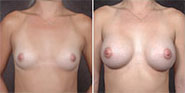
Before and After Photos
Recovery After Internal Bra Mastopexy
Recovery after internal bra mastopexy varies depending on the extent of surgery and whether any additional procedures are performed. Patients can expect some bruising, swelling, tightness, and mild discomfort during the early healing period. Medication is prescribed to help manage discomfort, and detailed aftercare instructions are provided before surgery.
Drains may be placed for approximately five to seven days to help minimize fluid buildup and swelling. Patients should avoid strenuous activity, heavy lifting, and vigorous exercise during the first several weeks. Many patients can return to work after about one week, depending on the physical demands of their job and how they are healing.
Most patients gradually resume normal exercise after approximately four weeks, although Dr. Kao will provide personalized guidance based on the procedure performed and the patient’s recovery progress. Swelling continues to improve over several weeks, and the breast shape becomes more refined as tissues settle.
Patients traveling to Los Angeles for surgery or those who want additional support after their procedure may have the option of staying at an aftercare facility. KO’AN Recovery Center is located near Dr. Kao’s surgical facility and provides post-surgical support in a licensed healthcare setting.
When Will Results Be Visible?
Patients will notice an immediate change in breast position after surgery, but early swelling and tissue tightness can temporarily affect the appearance of the breasts. As swelling subsides, the breast shape becomes softer, more natural, and more refined.
Most major swelling begins to improve within the first six weeks, although final results continue to evolve over several months. The internal support structure is designed to provide durable lift and support, but natural aging, gravity, weight fluctuation, pregnancy, and changes in skin quality can still affect the breasts over time.
Maintaining a stable weight, wearing supportive bras as recommended, and following post-operative instructions can help protect the result. Patients can also view examples of Dr. Kao’s surgical work by visiting the before and after photo gallery.
Why Choose Dr. Kao for Internal Bra Mastopexy in Los Angeles?
Dr. Chia Chi Kao is a board-certified plastic surgeon known for advanced aesthetic and reconstructive techniques. His approach to breast surgery emphasizes structure, shape, support, scar placement, and long-term elegance. Internal bra mastopexy reflects his focus on innovation, precision, and patient-specific planning.
At Kao Plastic Surgery, breast lift surgery is not treated as a one-size-fits-all procedure. Dr. Kao carefully evaluates each patient’s anatomy and goals to determine whether internal bra mastopexy, traditional mastopexy, breast implant revision, implant removal, fat transfer, or another breast procedure will produce the most appropriate result.
Patients can learn more about Dr. Kao’s background on the Meet Dr. Kao page, explore practice features on the In the Media page, and read patient experiences on the testimonials page.
Schedule an Internal Bra Mastopexy Consultation
If you are bothered by breast sagging but are concerned about the scars associated with a traditional breast lift, internal bra mastopexy may be worth exploring. The best way to determine whether you are a candidate is to meet with Dr. Kao for a personalized consultation.
To schedule an internal bra mastopexy consultation in Los Angeles, contact Kao Plastic Surgery at 310-315-9211 or complete the online contact form. The office is located in Santa Monica and welcomes patients from Los Angeles, Beverly Hills, Brentwood, Pacific Palisades, Malibu, and throughout Southern California.
Internal Bra Mastopexy FAQ
What is internal bra mastopexy?
Internal bra mastopexy is an advanced breast lift technique that reshapes and supports the breast tissue from the inside. Instead of relying only on tightened skin, the procedure creates internal support for the lower breast, helping improve breast position, shape, and long-term support.
How is internal bra mastopexy different from a traditional breast lift?
A traditional breast lift often requires an external incision pattern that may include an inverted-T or anchor-shaped scar. Internal bra mastopexy is designed to provide internal shaping and support while minimizing external scarring when a patient’s anatomy allows. In selected cases, the external incision may be limited to the area around the areola.
Who is a good candidate for internal bra mastopexy?
Good candidates are women with mild to moderate breast sagging, good skin quality, realistic expectations, and a desire for breast lift results with a scar-conscious approach. It may also be an option for women who need more support than a simple circumareolar lift can provide but want to avoid a traditional external inverted-T scar.
Can internal bra mastopexy correct severe breast sagging?
Internal bra mastopexy may not be ideal for every case of severe sagging. Patients with significant skin excess, very thin skin, poor elasticity, or advanced ptosis may need a different breast lift technique to achieve the safest and most reliable result. Dr. Kao will determine the best approach during consultation.
Does internal bra mastopexy use implants?
Internal bra mastopexy does not automatically include implants. It is primarily a breast lift and reshaping procedure. Some patients may combine a lift with implants, implant revision, implant removal, or fat transfer depending on their goals, existing breast volume, and anatomy.
What is the internal bra made of?
In some cases, Dr. Kao may use an acellular dermal matrix to help reinforce the lower breast. This supportive material is placed internally and gradually becomes incorporated into the patient’s tissue, helping create a supportive “internal bra” effect beneath the skin.
Will I have visible scars after internal bra mastopexy?
All surgery creates some scarring, but internal bra mastopexy is designed to minimize visible external scars when appropriate. In selected patients, the incision may be placed around the areola rather than using a traditional anchor-shaped incision. Scar appearance depends on skin quality, healing, genetics, and aftercare.
How long is recovery after internal bra mastopexy?
Most patients experience swelling, bruising, tightness, and mild discomfort during the early recovery period. Many patients can return to work after about one week, depending on the nature of their job. Strenuous activity and heavy lifting are usually avoided for several weeks, and most patients resume exercise around four weeks with Dr. Kao’s approval.
Are drains used after internal bra mastopexy?
Drains may be placed for approximately five to seven days to help reduce fluid buildup and swelling. Dr. Kao will explain whether drains are expected as part of your surgical plan during your consultation.
When will I see my final results?
You will see an immediate improvement in breast position after surgery, but swelling and tissue tightness can affect the early appearance. Most major swelling begins to improve within about six weeks, with continued refinement over several months as the breasts settle into their new shape.
Are internal bra mastopexy results permanent?
Internal bra mastopexy is designed to provide durable support, but no breast lift can stop the natural aging process. Gravity, weight changes, pregnancy, skin quality, and time can still affect the breasts. The internal support may help improve longevity compared with techniques that rely only on skin tightening.
Can internal bra mastopexy be combined with implant removal?
Yes, internal bra mastopexy may be considered as part of an implant removal and breast lift plan. After implants are removed, internal support can help reshape and elevate the remaining natural breast tissue in properly selected patients.
Can internal bra mastopexy help with bottoming out?
Internal support techniques may be useful for some patients with implant malposition, bottoming out, or lower breast stretching. The best correction depends on whether implants are being kept, exchanged, or removed, as well as the condition of the skin and breast tissue.
Is internal bra mastopexy right for me if I want larger breasts?
If your main goal is larger breast size, internal bra mastopexy alone may not be enough because it lifts and reshapes rather than adds volume. Patients who want more fullness may need breast augmentation, fat transfer, or a combined breast lift and volume enhancement procedure.
How do I schedule a consultation with Dr. Kao?
To schedule a consultation for internal bra mastopexy in Los Angeles, call Kao Plastic Surgery at 310-315-9211 or complete the online contact form. The practice is located in Santa Monica and serves patients from Los Angeles, Beverly Hills, Brentwood, Pacific Palisades, Malibu, and throughout Southern California.